
Karren B Warren (1947-2026)
It is with profound sadness that we share the news that our beloved colleague, the distinguished anthropologist Kay B. Warren, passed away peacefully on April 16, 2026, in Moscow, Idaho, at the age of 79. Kay was one of the most generous and intellectually fearless scholars of her generation, and her loss will be felt deeply across the many fields, communities, and institutions she touched.
Born on February 10, 1947, in Stanford, California, Kay Barbara Warren earned her B.A. in cultural anthropology and cultural geography from the University of California, Santa Barbara, in 1968, before continuing her graduate studies at Princeton University, where she received her M.A. in 1970 and her Ph.D. in cultural anthropology in 1974. She was among the first doctoral students trained in anthropology at Princeton and among the first cohorts of women graduate students at the University. She began her academic career at Mount Holyoke College in 1973, where she also taught at neighboring Smith College, and where, according to her students’ accounts, she first revealed herself to be a charismatic and transformative teacher.
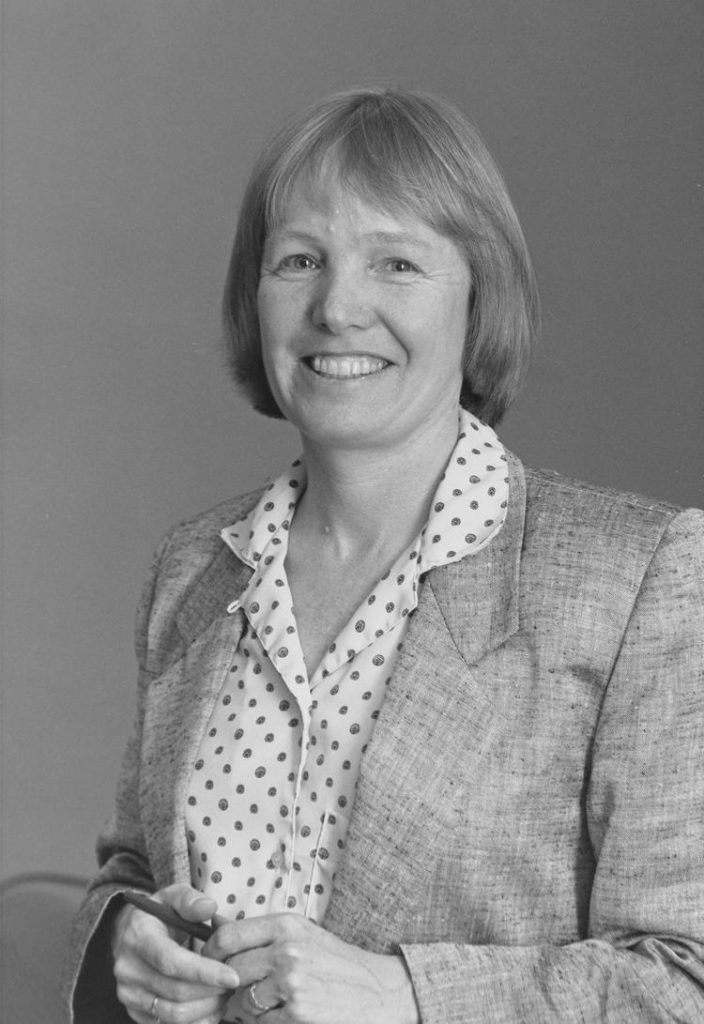
In 1982, Kay returned to Princeton as Associate Professor and as founding director of the Program in Women’s Studies, a directorship she held from 1982 to 1988 and through which she helped to establish the intellectual and institutional foundations for feminist scholarship at the University (the Program was renamed Gender and Sexuality Studies in 2011). Kay was promoted to full Professor in 1988 and served as Chair of the Department of Anthropology from 1994 to 1998.
In 1998, Kay joined Harvard University as Professor of Anthropology, and in 2003 she was appointed the Charles C. Tillinghast Jr. ’32 Professor of International Studies at Brown University, where she also held a professorship in the Department of Anthropology, directed the Politics, Culture, and Identity Program at the Watson Institute (2003–2008), and served as Director of the Pembroke Center for Teaching and Research on Women from 2010 to 2014. She became Professor Emerita at Brown in 2017.
Throughout her distinguished career, Kay B. Warren conducted extensive ethnographic fieldwork that took her to the Guatemalan highlands, where she worked most extensively, as well as to the Peruvian Andes, Japan, Colombia, and the corridors of international policymaking in Washington and Geneva. Her abiding intellectual concerns — the lives of politically marginalized and Indigenous communities, the cultural politics of violence and peace, gender and social change, transnationalism, foreign aid, and the workings of international legal norms — were pursued with a rare combination of ethnographic depth, comparative and theoretical ambition, and moral commitment.
Kay’s first book, The Symbolism of Subordination: Indian Identity in a Guatemalan Town (1978), based on fieldwork among the Maya in Guatemala, established her as a major voice in the anthropology of ethnicity and racism. With her longtime collaborator Susan C. Bourque, she co-authored Women of the Andes: Patriarchy and Social Change in Two Peruvian Towns (1981), an award-winning ethnography that became a landmark in feminist anthropology and that remains in print decades after its publication. She returned to Guatemala throughout the 1990s, producing Indigenous Movements and Their Critics: Pan-Maya Activism in Guatemala (1998), a defining study of indigenous resurgence and cultural politics in the wake of state violence. Her edited volumes — The Violence Within: Cultural and Political Opposition in Divided Nations (1993), Indigenous Movements, Self-Representation, and the State (with Jean Jackson, 2002), and Ethnography in Unstable Places (with Carol Greenhouse and Beth Mertz, 2002) — set a comparative agenda for an entire generation of scholarship on conflict, identity, and the state. In her later years, her work turned to the transnational politics of human trafficking, foreign aid, and international law, including her co-edited volume with David Leheny, Japanese Aid and the Construction of Global Development (2010).
Kay was as much an exceptional scholar as she was a luminous teacher and a most caring adviser. Across Princeton, Harvard, and Brown, her seminars — among them Introduction to Cultural Anthropology, Indigenous Cultures of Mexico, Guatemala, and Peru, Culture and Conflict, Rethinking Political Anthropology, Representing Difference: Documentary Film as Practice, Ethnographies of Violence, Contemporary Theory in Cultural Anthropology, Ethnography across the Pacific Rim, Markets and Bodies, and Trafficking, Transnationalism, and the Law — became formative experiences for generations of students who went on to careers in anthropology, law, public policy, and activism. The introductory Women’s Studies course she co-taught at Princeton over the years with Natalie Davis, Sandra Gilbert, and Christine Stansell stands among the most influential interdisciplinary courses of its era. Her former students remember her as charismatic, intellectually demanding, and supremely generous — a mentor who took their ideas, and their lives, seriously.
The honors Kay B. Warren received are too numerous to list in full. Among them: a John Simon Guggenheim Fellowship; a Wenner-Gren Foundation Fellowship; a Membership at the Institute for Advanced Study at Princeton; a Fulbright Senior Research Fellowship; an Abe Fellowship from the Social Science Research Council and the Japan Foundation; a Visiting Professorship at the École des Hautes Études en Sciences Sociales in Paris; the Olof Palme Guest Professorship at the University of Stockholm (2004); an Honorary Doctorate from the University of Stockholm (2005); the Lewis Henry Morgan Lectures at the University of Rochester (2005); membership on the World Economic Forum’s Council on Illicit Trade (2008–2010); the Hua Ying Distinguished Visiting Professorship at Nanjing University (2012); and a Lifetime Achievement Award from the National Council for Research on Women (2012).
We extend our heartfelt condolences to her lifelong partner, Loy Carrington, and to the many students, colleagues, and close friends, in this country and around the world, who were shaped by her example. She leaves behind a body of scholarship of remarkable range and depth, and a community of those she taught, mentored, and inspired who will carry her intellectual courage, her commitment to social justice, and her unfailing generosity forward. She will be deeply missed.
By Anthropology, Princeton University