Dr. Audrey Butt Colson (1926 – 2026)
“Fountain of knowledge, painter of the culture of Pemon and Akawaio and a sincere and a real defender of their historic rights”
Dr Audrey Butt Colson, who has died aged 100, was one of the founders of Survival International.
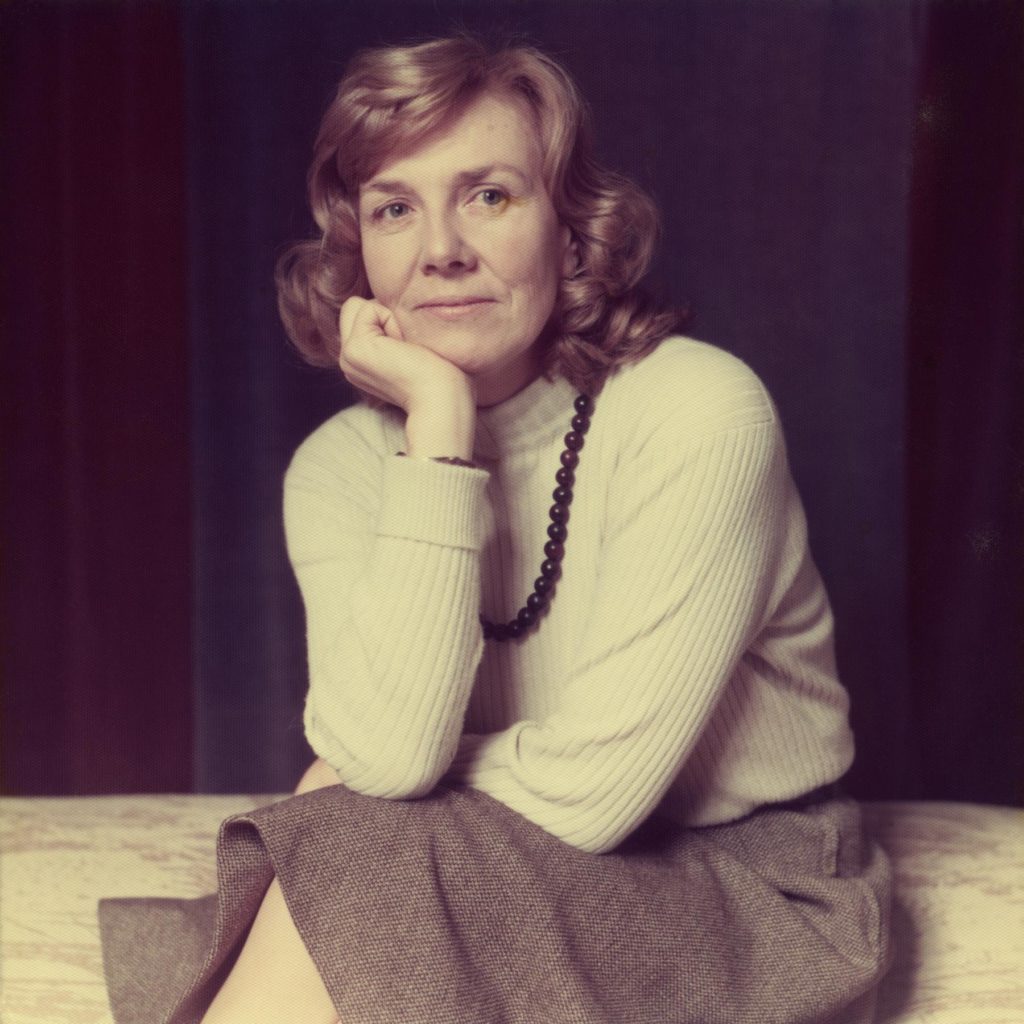
Dr Audrey Butt Colson
During a lifetime of working with Indigenous peoples in Guyana and Venezuela she campaigned tirelessly and vociferously for their land rights, and forged many enduring friendships with her Indigenous hosts who, as she once remarked, “became my friends and adopted family.”
Her knowledge of Akawaio and Pemon kinship ties was legendary and much appreciated by them – Akawaio elders in Guyana referred to her as the “guardian of the extended and joint family unity”. Travelling with her on the Gran Sabana in Venezuela, where she knew generations of Pemon families in almost every community, rightly took considerable time.
She had a phenomenal topographical atlas in her head, and even at the age of 100 could remember the names of the most obscure tributaries in the Guiana Shield region.
Audrey began her long relationship with the Akawaio and Arekuna of the Upper Mazaruni River in Guyana in 1951, and lived with them for two years, accompanied by her large Alsatian dog. She lived with them again in 1957.
The Akawaio will surely remember Audrey for her heroic defence of their land rights and the successful campaign she led to convince the World Bank not to fund a hydro-electric dam and power plant that had been proposed on the Mazaruni River by the Guyanese government in the early 1970s.
The dam would have flooded and destroyed the entire Akawaio people, as she graphically demonstrated in the report “The Damned: The Plight of the Akawaio Indians of Guyana” which Survival published in 1978. She wrote that: “The inundation of the Upper Mazaruni means the destruction of a People through the obliteration of ancestral lands and of the complex of relationships within a social structure which rests on a particular, unique topography and fluvial system.”
Whilst writing the report, Audrey walked for several days through the savannas of Roraima in Brazil to meet a messenger on the border with Guyana, dispatched by the Akawaio to deliver her a moving statement of their opposition to the dam. Faced with the prospect of ejection from their ancestral lands they asserted: “This land keeps us together within its mountains ─ we come to understand that we are not just a few people or separate villages, but one people belonging to a homeland…. The way of living in these mountains is a thing we learned from the land.”
Audrey met with World Bank officials in Washington and spoke at several universities in the US to demonstrate how catastrophic the dam would be. This lobbying tour, together with her report, received considerable government and media attention, and successfully persuaded the World Bank to withdraw its funding, which in turn forced the government to shelve the entire project.
As a result of her high-profile campaign Audrey was banned from Guyana, and sadly was never able to return to visit the Akawaio. But despite this she corresponded with many of them throughout her life, and was always extremely well-informed on events in the communities.
In 2009 she published a magisterial book “Land: its Occupation, Management, Use and Concepualization. The case of the Akawaio and Arekuna of the Upper Mazaruni District, Guyana”. It’s a comprehensive and forensic examination of the Akawaio’s long, historical occupation of their land and their relationship with it. She was inspired to write it for the Akawaio and Arekuna to use in their long-running legal case against the Guyanese government for failing to recognise their land rights. They asked Audrey to be an expert witness in the case, but despite being sworn in, the presiding judge deemed she could not be an expert witness because she had written the book with a view to litigation and that this “raised the issue of the obligation of an expert to impartially assist the court.” Clearly hostility among some in the establishment still ran deep.
In 2013 Survival published Audrey’s report: “Dug out, dried out or flooded out?” which revealed the Guyanese government’s plan to resurrect the dam project on the Upper Mazaruni River. The Akawaio and Arekuna who were not consulted about the proposal were quick to mobilise against it and it was again shelved.
Unable to return to Guyana Audrey began to work with the Pemon in Venezuela, and visited them frequently in their homeland on the Gran Sabana, which with its spectacular tepuis (flat-topped mountains), giant waterfalls and open savannas was a place which she came to love.
She enjoyed a long and fruitful collaboration with the linguist Fray Cesario de Armellada who published a Pemon dictionary and documented Pemon myths and tales. Together, they digitised their interviews and recordings of Pemon to ensure access for future generations of Indigenous students.
Audrey’s fame preceded her on the Gran Sabana and she was interrogated by the director of Venezuela’s Frontiers Directorate (Dirección de Fronteras) about the Mazaruni dam. She recalled years later that it was an “uncomfortable and hair-raising” experience. During the long interview the director left the room and she went over to his desk to open the drawer to see whether he was secretly recording her. She then became aware of a large mirror on the wall and guessed that he or his team were watching her. He returned and said he’d report her. She asked him to push the drawer, and he did so very hard and then she had heard the click of the recorder and concluded: “He knew that I knew that he was recording me.”
Audrey was born in Gloucestershire, England and studied anthropology at Oxford University under Edward Evans Pritchard. She completed her doctorate in 1954 and became a lecturer in Ethnology there from 1955-82. She was also a curator of the Pitt Rivers Museum, a visiting professor at the Instituto Venezolano de Investigaciones Cientificas (IVIC), Caracas from 1975-76, and a visiting director of social sciences studies at the Ecole des Hautes Etudes, Paris in 1987.
Her academic output was considerable and covered wide-ranging subjects from shamanism, land use, social structure and political organization to birth customs, health cures and astronomy.
She collaborated with film-makers on several films and contributed over 300 objects she collected during her field work to the Pitt Rivers Museum. The museum featured her and five other female anthropologists in a special exhibition “Intrepid Women: Fieldwork in Action, 1910-1957” noting that they “All faced significant prejudice from male colleagues and had difficulty getting the same professional positions and funding that men would have.”
Audrey was married to Robin Colson (who died in 2022), an engineer she met in Guyana. It was a long and happy partnership, and he was extremely supportive of her academic and activist work. He accompanied her during much of her field work in Venezuela and is fondly remembered by generations of Pemon and Akawaio people.
They lived for decades on an old farm in Gloucestershire where they kept a large herd of sheep. Audrey was very fond of her flock of guinea fowl, so they never made it to the pot! She was also proud of the rare newts which inhabited a pond in the garden where she gardened every afternoon without fail.
We at Survival shall remember Audrey for her courage and resilience, her warmth and generosity and her determined and unwavering spirit. She touched the lives of many and put her career on the line to fight for justice for Indigenous peoples. There can be no better example of a truly engaged and committed anthropologist than Audrey.
Yauyarino Jerrick André, an old Pemon friend paid this tribute to her: “I personally knew her and appreciated her as the fountain of knowledge, the true painter of the culture of Pemon and Akawaio and a sincere and a real defender of the historic rights of the Pemon people. A friend, a humble and a living woman who dedicated her life to make sure the Pemon knew their rights. I thank her so much for the knowledge she shared with me since 1981 – this has helped me to open the minds of my people, otherwise we will be like a tree without roots. May the good Pia [creator] give her a peaceful rest.”