

RAI Research Seminar
Wednesday 29 April, 4-6pm BST
This is a hybrid event.
To join online, register here.
To join in Person at the RAI (50 Fitzroy Street, W1T5BT), register here.
The Science and Philosophy of Social Anthropology
James Rose, The University of Melbourne
Since its inception in the 1870s, the field of social anthropology has been riven by internal philosophical debates about its object of study, parameters of study, and causal models of explanation. However, there is a divergence between these philosophical debates, which are mostly restricted to the academy, and the scientific implementation of social anthropological expertise outside the academy. Following World War II, which was triggered initially by racist anti-science philosophies, the United Nations drew directly on social anthropological expertise to develop a series of scientific statements on race, clarifying the distinction between human social culture and biology. This expertise formed part of the subsequent underpinning for the 1972 UN Convention Concerning the Protection of the World Cultural and Natural Heritage, and later the 2003 UN Convention for the Safeguarding of the Intangible Cultural Heritage, and 2007 UN Declaration on the Rights of Indigenous Peoples. All three conventions, administered by the United Nations Educational, Scientific and Cultural Organization, directly reference a formal and coherent scientific definition of human social culture, apparently free of the philosophical uncertainty still plaguing the academy today. At the present moment, as anti-science philosophies are once again leveraged to justify a possible world war, the divergence between the science and philosophy of social anthropology appears increasingly anachronistic. Can contemporary social anthropology contribute to international peace and stability in the 21st century as it did in the aftermath of World War II?
Drawing on the author’s two decades’ experience working in forensic and expert social anthropology on issues of customary law and legal pluralism, this seminar traces the decoupling of the science and philosophy of social anthropology over the past 50 years. The seminar sets out a possible pathway out of this decoherence by elaborating on the work of UNESCO and the International Labor Organization to define professional standards for the field. The seminar highlights the value of social anthropology as a well-defined and coherent social science grounded in international law, and capable of contributing to equitable peace and stability among the world’s diverse cultures.
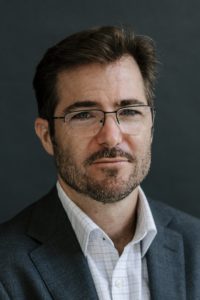
Dr James Rose is Senior Fellow with the Melbourne School of Population and Global Health in the Faculty of Medicine at the University of Melbourne, Australia. He is a member of the Royal Anthropological Institute’s Committee on Forensic Anthropology, and Senior Consultant Forensic and Expert Social Anthropologist in private practice in Australia. He holds a PhD from the University of Melbourne and BA(Hons) in Social Anthropology from the University of Sydney, and has worked in academia, government, and private industry for 24 years