
The Journal of the Royal Anthropological Institute produces an annual Special Issue, comprising of a collection of articles as voted for by the RAI Publications Committee. Each Special Issue will be distributed by Wiley-Blackwell free of charge to RAI Fellows, and as part of the subscription to libraries taking the JRAI.
Please note that the windows for submitting to the 2027 and 2028 Special Issues have now closed. The window will reopen in December 2026 for proposals to the 2029 Special Issue.
For more information on the JRAI Special Issues or proposal submissions, please reach out to [email protected].
Current Special Issue
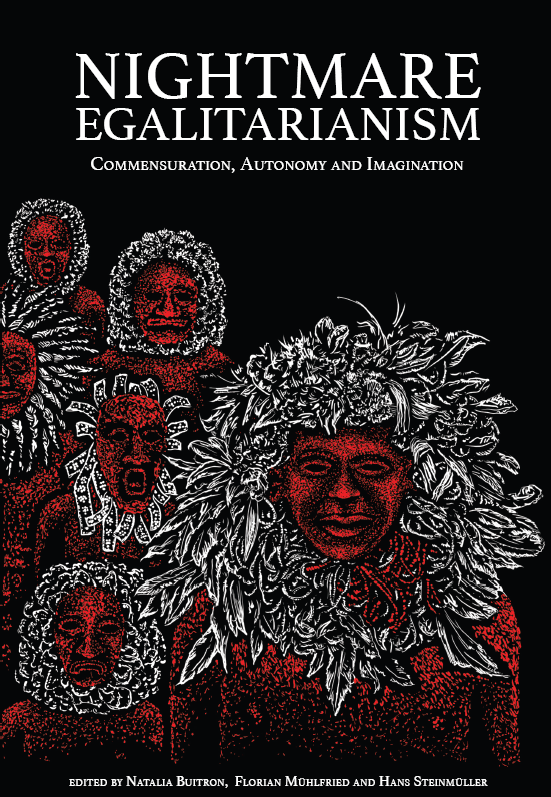
Nightmare Egalitarianism
Editors: Natalia Buitron, Florian Mühlfried, Hans Steinmüller
Associate Editor: Simon Coleman
Egalitarianism – creating equality among people – always requires levelling and measurement. Levelling, however, is often violent, and potentially in tension with local autonomy. Based on case studies from Amazonia, Burma, Georgia, India, Malawi, Morocco, and the Ancient Near East, this special issue probes into the dark sides of egalitarianism. Contributors show how the very forces that level differences also generate new exclusions.
The collection offers a solid framework to distinguish different modes of egalitarianism; the main variable being the strength of commensuration: universal levelling in ‘general egalitarianism’, partial commensurability in ‘segmentary egalitarianism’, and the refusal of equivalence in ‘non-egalitarianism’. By tracing the social dynamics of autonomy, imagination, and containment, the issue invites readers to rethink one of anthropology’s most cherished concepts.
First published: 09 March 2026 https://doi.org/10.1111/1467-9655.70002
Beyond Public Reason
Editors: Charis Boutieri, Samuel Sami Everett, Erica Weiss
Associate Editor: Narmala Halstead
This special issue revisits the concept of liberal public reason, tracing its intellectual lineage from Enlightenment philosophy through Jürgen Habermas and John Rawls to its contemporary role in shaping political institutions and global governance. Long celebrated for its universalist aspirations, public reason has also been shown (particularly through anthropological inquiry) to rest on exclusions structured by culture, race, gender, class, and religion. The contributions gathered here interrogate how liberal public reason operates not only as a normative ideal but also as a hegemonic philosophy and pedagogical instrument, disseminated across transnational contexts as a model of rational, secular deliberation. At the same time, this issue moves beyond critique. The essays examine immanent social projects that enact alternative modes of public reasoning grounded in vernacular, embodied, and relational practices. Emerging both within and beyond liberal institutions, these projects articulate political horizons not fully determined by liberal assumptions. Rather than opposing liberalism to its presumed “illiberal” others, the authors illuminate diverse forms of deliberation – from community organizing and legal argumentation to spiritual claims and practices of solidarity – that reconfigure public reason as plural, situated, and responsive to deep difference without demanding assimilation to liberal norms.
First published: 04 Dec 2025 https://doi.org/10.1111/1467-9655.70003

Previous Special Issues
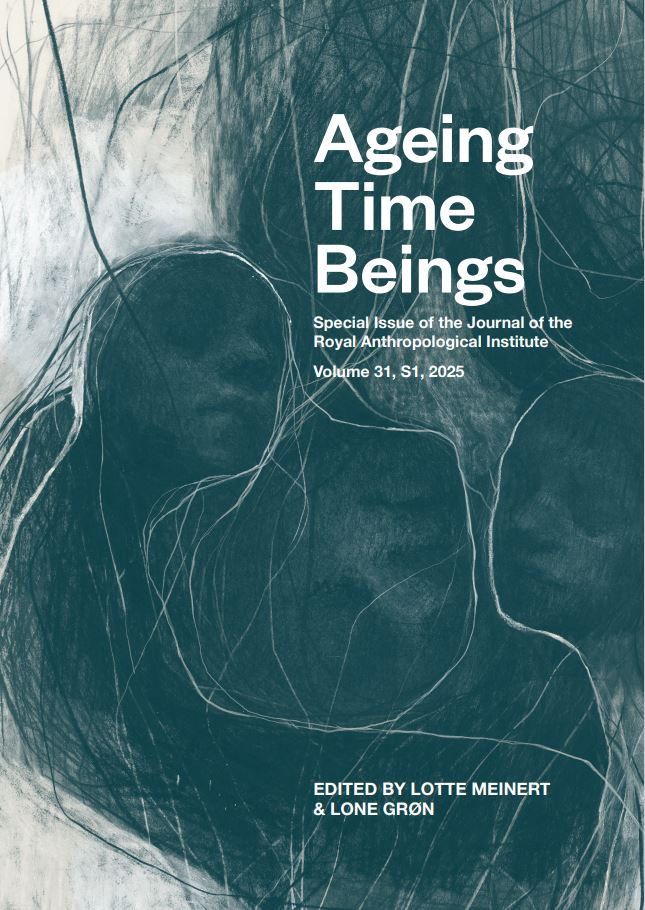
2025 (S1): Ageing Time Beings edited by Lotte Meinert and Lone Grøn (available on Wiley Online Library here)
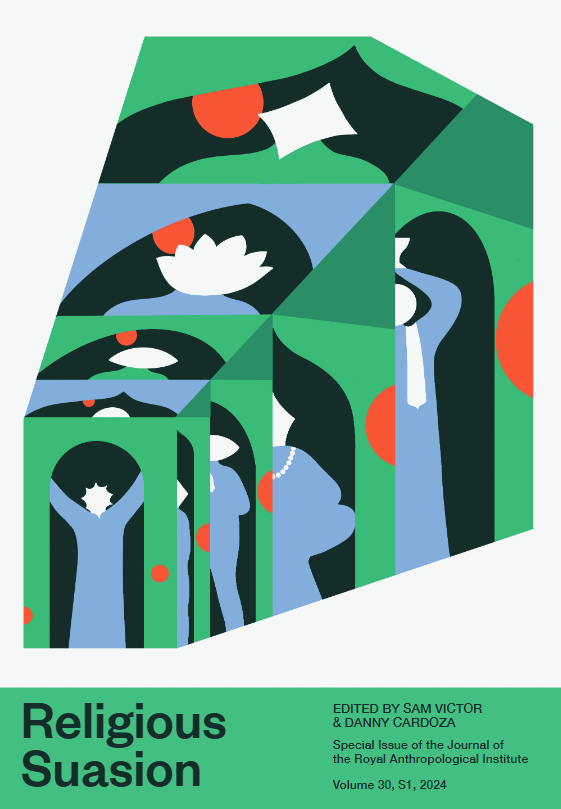
2024: Religious Suasion edited by Sam Victor and Danny Cardoza (available on Wiley Online Library here)
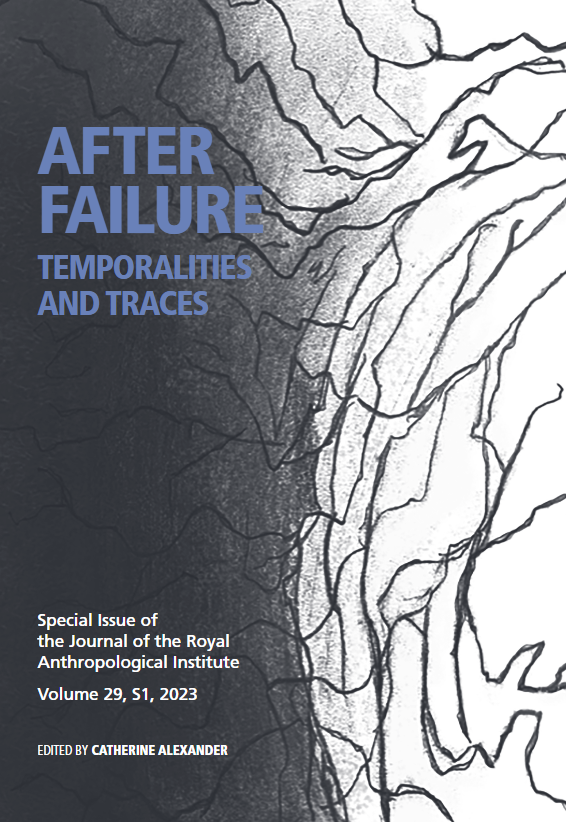
2023: After Failure: Temporalities of and Traces edited by Catherine Alexander (available on Wiley Online Library here)
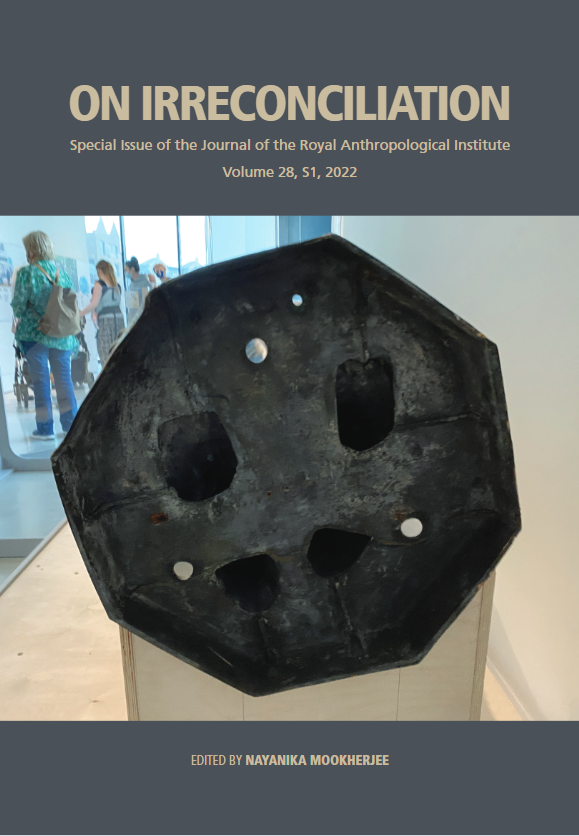
2022: On Irreconciliation edited by Nayanika Mookherjee (available on Wiley Online Library here)
2021: Towards and Anthropology of Data edited by Rachel Douglas-Jones, Antonia Walford, Nick Seaver (available on Wiley Online Library here)
2020: Mind and Spirit: A Comparative Theory edited by Tanya Luhrmann (also available as a stand alone book from Wiley here)
2019: Energy and Ethics? edited by Mette M. High and Jessica M. Smith (also available as a stand alone book from Wiley here)
2018: Dislocating Labour: Anthropological Reconfigurations edited by Penelope Harvey and Christian Krohn-Hansen (also available as a stand alone book from Wiley here)
2017: Meetings: Ethnographies of Organizational Process, Bureaucracy, and Assembly edited by Hannah Brown, Adam Reed, and Thomas Yarrow (also available as a stand alone book from Wiley here)
2016: Environmental Futures, edited by Jessica Barnes (also available as a stand alone book from Wiley here)
2015: The Power of Example: Anthropological Explorations in Persuasion, Evocation, and Imitation, edited by Andreas Bandak and Lars Højer (also available as a stand alone book from Wiley here)
2014: Doubt, conflict and mediation: the Anthropology of Modern Time, edited by Laura Bear (also available as a stand alone book from Wiley here)
2013: Blood Will Out: Essays on Liquid Transfers and Flows, edited by Janet Carsten (also available as a stand alone book from Wiley here)
2012: The Return of Hospitality: Strangers, Guests, and Ambiguous Encounters, edited by Matei Candea and Giovanni Da Col
2011: The Aesthetics of Nations: Anthropological and Historical Approaches, edited by Nayanika Mookherjee and Christopher Pinney
2010: Making Knowledge, edited by Trevor Marchand (also available as a stand alone book from Wiley here)
2009: Islam, Politics, Anthropology, edited by Filippo Osella and Benjamin Soares (also available as a stand alone book from Wiley here)
2008: The Objects of Evidence: Anthropological Approaches to the Production of Knowledge, edited by Matthew Engelke (also available as a stand alone book from Wiley here)
2007: Wind, Life, Health: Anthropological and Historical Perspectives, edited by Elisabeth Hsu and Chris Low (also available as a stand alone book from Wiley here)
2006: Ethnobiology and the Science of Humankind, edited by Roy Ellen (also available as a stand alone book from Wiley here)